
· by Michael Blair, Nashville's Garage Floor
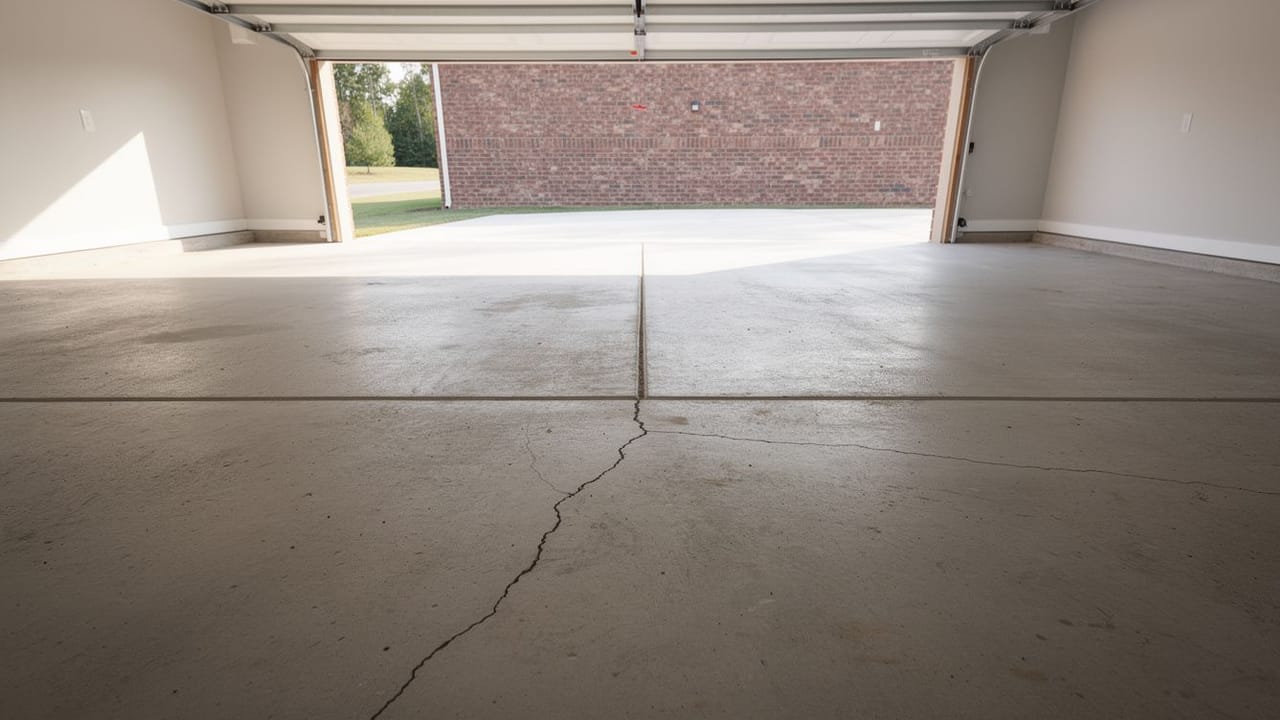
Many cracks in a concrete slab come from drying shrinkage, and the Bureau of Reclamation’s Guide to Concrete Repair treats that kind as unsightly but seldom worth repairing for looks alone. A coating changes the question. The same guide says many coatings cannot properly bridge cracks in concrete, and that only specialized ones, in certain conditions, can bridge a moving crack. So before we put down an epoxy floor, the thing we need to know about each crack is whether it is still moving.
Static versus active
Reclamation’s guide says that for many crack repairs you first have to determine whether a crack is “live” or “static.” It recommends watching the movement over an extended period, to learn whether the crack is simply opening and closing with daily or seasonal temperature swings or widening over time, and it names gauges and photographs taken at intervals as ways to track it. On a garage floor we mark both ends of a crack, note its width, and look again after a season or two before we decide anything.
A crack that has stopped moving can be filled and coated over. One that is still working is a different job. The guide notes that epoxy cures hard and brittle and will not withstand movement of the crack, and it warns that a crack left below a new layer will likely reflect up through it, so most coatings laid over a live crack will show it again.
How they are repaired
The guide sets the order: spalls, cracks and deteriorated joints are repaired before a coating goes on. It also warns that when the wrong method is used, cracks usually come back in the repair material or the concrete beside it, and the original damage can get worse. On a static crack, our method is to open it to a consistent width, clean it out, fill it with an epoxy or polyurea filler and grind the fill flush with the slab, as part of the grinding and repair work that comes before any coat.
Reclamation ties the choice of repair to the cause of the cracking, and it keeps rigid epoxy for cracks that are dormant. We do not reach for a general-purpose patch or a tube of caulk because it happens to be on the shelf, and a crack that is still moving waits until we know why.
- Watch before repairing: mark the ends, measure, look again later
- Open the crack to a consistent width rather than filling it as found
- Epoxy or polyurea filler, ground flush with the slab
- Control joints stay joints, never bridged with rigid filler
- Spalled areas: weak concrete cut out and replaced with a repair material
Are the saw-cut lines in a garage slab cracks?
The straight saw-cut lines in a garage slab are control joints, not cracks. Reclamation’s technical memorandum on joint spacing describes them as planes of weakness built in deliberately, so that shrinkage cracking happens along them without marring the appearance of the concrete, and notes that notches or saw cuts control where the cracks form.
That makes a joint something to keep. The repair guide says joints almost always need to be preserved in an overlay or partial-depth repair, because a repair material bonded on both sides of a joint will crack. Where a joint is filled, it gets a product made for joints: Sika’s guide to preparing concrete for its floor systems describes control joints filled with an epoxy or polyurea joint filler and shaved smooth to a flush profile, which protects the edges from wheeled traffic. Before a job starts we tell you which joints we will fill and which we will leave open.
When is a garage slab past coating?
Spalling across much of the floor, crack faces that have shifted out of line, or a slab that has settled with the ground under it are beyond what a coating can fix. Reclamation puts structural cracks from foundation settlement among the damage that will usually need repair, and both it and Sika want weak or non-durable concrete removed and replaced before a coating is installed. For local spalls, the guide describes cutting out the weakened concrete and replacing it with a packaged repair material.
Past that point the options are grinding and an overlay, or a new slab. An overlay does not cure a moving crack, though: the guide calls reflective cracking common in bonded overlays, where the old crack comes back up through the new material. A coating that fails for a different reason is covered in our post on why garage floor coatings peel. It is worth an honest look before any money goes on a coating, so ask us for a free estimate and we will tell you which side of that line your floor is on.
Sources
- U.S. Bureau of Reclamation, Guide to Concrete Repair, Second Edition (2015) — Shrinkage cracking unsightly but seldom worth repairing for looks; many coatings cannot bridge cracks, only specialized ones bridge moving cracks; live versus static; monitor movement over time; epoxy hard, brittle, for dormant cracks only; repair cracks and spalls before coating; improper methods bring cracks back; joints preserved in repairs; spall repair with packaged material; settlement cracks need repair; reflective cracking in overlays
- U.S. Bureau of Reclamation, Technical Memorandum CGSL-8530-2016-13, Joint Spacing for Concrete Structures (2016) — Control joints are planes of weakness built in deliberately; notches or saw cuts control where shrinkage cracks form
- Sika USA, Surface Prep Guide — Control joints filled with epoxy or polyurea joint filler and shaved flush; substrates must be sound; non-durable concrete removed and replaced before the flooring system
FAQ
Fixing Garage Floor Cracks Before Coating — questions
Will epoxy hide cracks in my garage floor?
A static crack that is filled and ground flush before coating becomes much less visible. A crack that still moves with the seasons is likely to show again, because most coatings cannot bridge a moving crack and rigid epoxy does not stretch with it. Watching the crack for a season or two first tells you which kind you have.
Should the saw-cut lines be filled?
They are control joints, cut so the slab cracks along them, so they are kept as joints rather than coated over as if they were cracks. A rigid repair material bonded across both sides of a joint will crack along it. Where a joint is filled, it gets a joint filler made for the purpose, shaved flush with the floor. Ask your installer which joints they plan to fill and with what.
Can a badly spalled floor be coated?
Not as it is. Weak or deteriorated concrete has to be removed and replaced before a coating goes on, because the coating needs sound concrete to hold to. The options are cutting out and patching the spalled areas, grinding back to sound concrete and applying an overlay, or replacing the slab. A coating quote that ignores widespread spalling has skipped a step.
Are cracks in a garage floor normal?
Many are. Drying shrinkage cracks a lot of slabs, and the Bureau of Reclamation calls that kind unsightly but seldom worth repairing for looks alone; the saw-cut control joints are there so it happens along them. Cracks from a settling slab, or with one side shifted out of line, are a different matter and usually need repair.