
· by Michael Blair, Nashville's Garage Floor
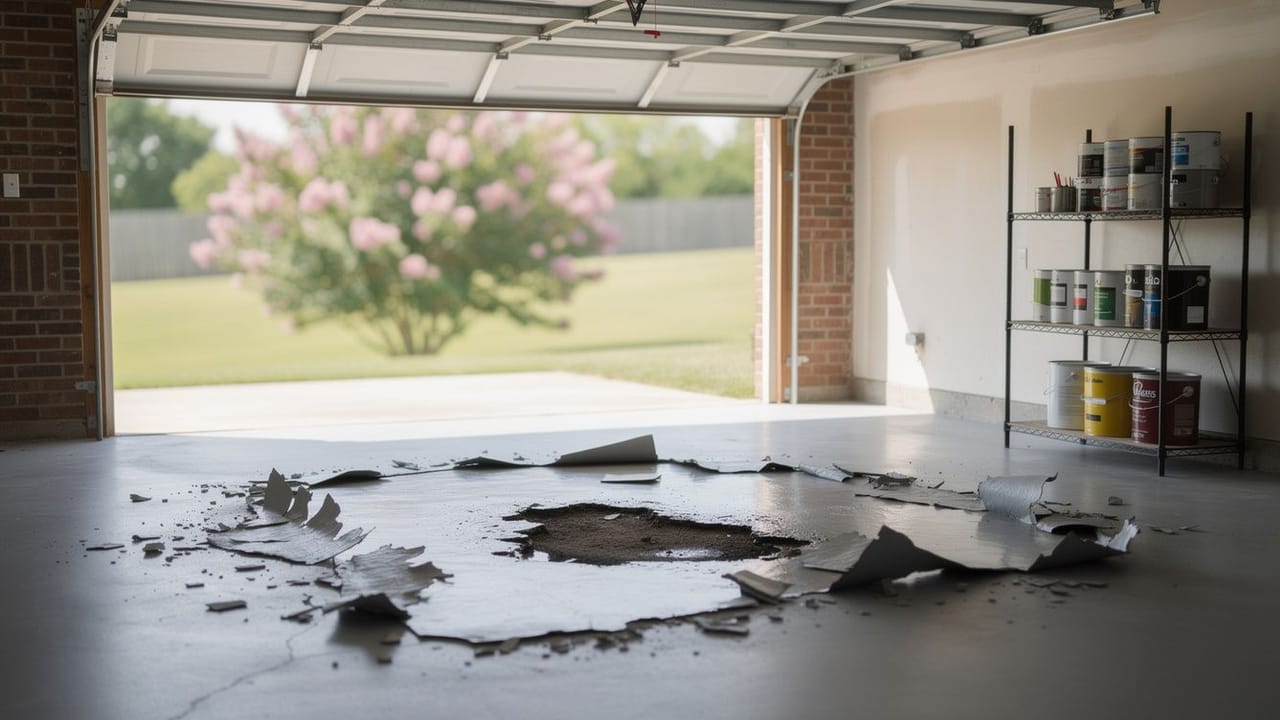
A garage floor coating either holds on to the concrete or it lets go, and how the slab was prepared is the main thing that decides which. ASTM’s standard practice for preparing concrete by abrasion is written for floors where the best possible bond is wanted, which tells you where the industry thinks the bond is won. When we are called to a peeling floor, we ask how the concrete was prepared before we ask what went on it.
Why does concrete need a profile before coating?
A coating needs a roughened surface to grip, and the weak, powdery top skin of the slab, called laitance, has to come off first. That is what the ASTM abrasion practice is for: creating a surface profile and removing laitance and foreign material. Sika’s surface prep guide says concrete must be mechanically prepared and names shot blasting and grinding as well suited to the work. On a house garage, that means the diamond grinding and concrete prep we do before any coating.
Acid etching is the other route, and the one a homeowner can take without renting a grinder. ASTM keeps a standard practice for acid etching concrete before coating, so it is a recognized method. We still grind, because an etch that runs uneven or is not rinsed off well leaves a patchy surface, and with a ground floor we can see and feel the profile before the first coat.
Moisture is the other half
Every concrete slab gives off some moisture as vapor, and ASTM F1869, the calcium chloride test method, calls it a natural process driven by environmental conditions. Too much of it causes trouble: ASTM F2170, the in-situ relative humidity test, lists debonding of coatings among the failures that excess slab moisture can bring on, and notes that manufacturers generally require moisture testing before installation.
So we test before we pick a product. A plastic sheet taped to the slab, the method in ASTM D4263, indicates whether capillary moisture is present, and it is quick. The calcium chloride test reports pounds of vapor over 1,000 square feet in 24 hours, and the probe test reports a percent relative humidity. Both standards make the same point about their results: each reading describes the slab on the day it was taken.
Weak and damaged concrete is the third thing we deal with before coating. Sika’s guide says non-durable concrete has to be removed and replaced before a floor system goes in, and that voids and surface defects need repairing first. Cracks get their own treatment, set out in our post on fixing garage floor cracks before coating.
- Grind or shot blast the slab to a profile; we do not rely on an acid etch
- Test the slab for moisture before choosing a product
- Remove weak concrete and fill spalls and voids before coating
- Get oil and grease out of the concrete before anything goes on it
- Follow the product data sheet for recoat windows and cure times
Does oil in the concrete have to come out before coating?
Oil and grease have to be removed before a coating goes down, and ASTM D4258, the practice for cleaning concrete for coating, is the standard for doing it. The same standard says cleaning is not meant to change the surface profile, which is why a degreased floor still gets ground. Sika’s guide adds that the concrete’s porosity and how long it was exposed both affect how well contamination cleans out, and that concrete which cannot be decontaminated must be cut out and replaced.
When a coating keeps letting go in the same spot, we look at what was parked over it, and a drip that ran for years under an older car is the first thing we check for. Sika’s guide checks a cleaned floor with a surface pH test, and if the reading is 10 or lower, it calls for more decontamination before coating.
Hot tire pickup
Some calls start with a photo of bare patches in the parking spots, shaped like the tires that sat on them, which the trade calls hot tire pickup. We look at the same things this post has covered so far, the preparation and the bond, and then at whether the coating was made for cars parked on it.
The product matters here as well as the prep, so before a coating goes on a garage floor we confirm with its manufacturer that it is meant for vehicle traffic. Our comparison of epoxy and polyaspartic covers how we choose between the two. If your floor is already lifting, send us a few photos and ask for a free estimate, and we will tell you whether it needs patching or grinding off.
Sources
- ASTM D4259-24, Standard Practice for Preparation of Concrete by Abrasion Prior to Coating Application — Abrasion creates a surface profile and removes foreign material and weak surface laitance; used where optimum bond is desired
- Sika USA, Surface Prep Guide — Concrete mechanically prepared by shot blasting or grinding; non-durable concrete removed and defects repaired first; porosity and exposure time affect decontamination; pH 10 or lower needs more decontamination; contaminated concrete that cannot be cleaned is replaced
- ASTM D4260-05(2017), Standard Practice for Liquid and Gelled Acid Etching of Concrete — Acid etching is a standard practice for preparing concrete for coatings
- ASTM F1869-23, Moisture Vapor Emission Rate of Concrete Subfloor Using Anhydrous Calcium Chloride — All concrete emits some moisture vapor, a natural process driven by environmental conditions; results in pounds per 1,000 square feet over 24 hours; a reading reflects the slab at the time of the test
- ASTM F2170-19, Relative Humidity in Concrete Floor Slabs Using in situ Probes — Excess slab moisture can cause debonding of coatings; manufacturers generally require moisture testing; results reflect the slab only at the time of the test
- ASTM D4263-24, Indicating Moisture in Concrete by the Plastic Sheet Method — Plastic sheet method indicates capillary moisture in concrete before coating
- ASTM D4258-05(2017), Standard Practice for Surface Cleaning Concrete for Coating — Cleaning removes grease, dirt and loose material before coating and is not intended to alter the surface profile
FAQ
Why Garage Floor Coatings Peel Off — questions
Why did my DIY epoxy kit peel?
Common causes include a surface that was not prepared well enough for the coating to grip, moisture coming up through the slab, and oil or grease left in the concrete. An acid etch is a recognized way to prepare concrete, but an uneven or poorly rinsed etch leaves a patchy surface, which is why we grind the floors we coat.
What is hot tire pickup?
It is the name for bare patches that open up where a car’s tires sit, where the coating has come away with the tires. When we see it, we look at how the slab was prepared and whether the coating was meant for vehicle traffic, and we confirm with the manufacturer that a product is suitable for a garage before we recommend it.
How do I know if my slab has a moisture problem?
A sheet of plastic taped tightly to the concrete is a quick first check, and ASTM D4263 uses it as an indicator of moisture in the slab. It is a screen, not a measurement. A calcium chloride test or in-situ relative humidity probes give a number to check against the coating’s product data sheet, and any result describes the slab only on the day it was tested.
How do you fix a peeling epoxy garage floor?
Find out why it peeled first, since the cause decides the repair. We check how the slab was prepared, test it for moisture and look for oil soaked in under the parking spot. Depending on how much has lifted, it is patched or ground off, and concrete that cannot be cleaned is cut out and replaced.