
· by Michael Blair, Nashville's Garage Floor
When the floor of a garage keeps turning up wet, the water has usually found one of three ways in, and the fix for each has almost nothing in common with the others. We check for it before we quote an epoxy garage floor, because a coating does nothing to stop water getting in. Before anyone blames the slab, it’s worth working out which of the three you have.
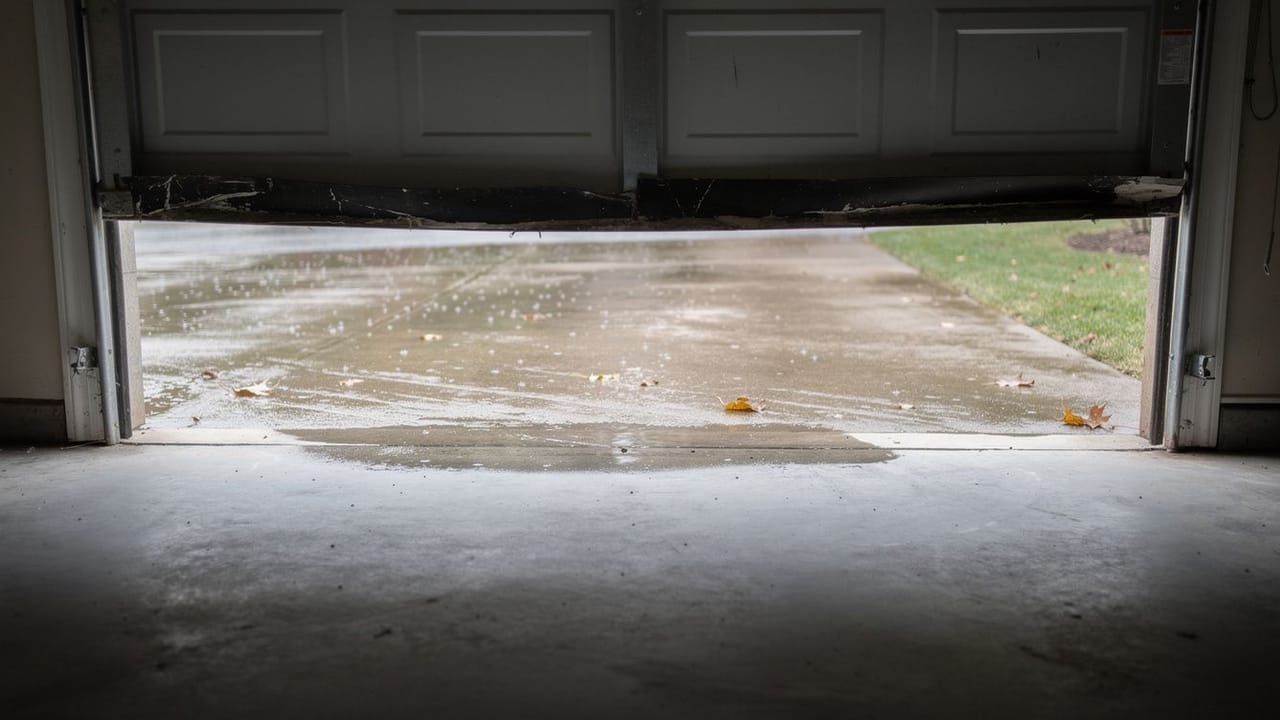
Coming in under the door
This one is common. A worn bottom seal, a threshold that has settled unevenly or a driveway apron that tips toward the garage will all let wind-driven rain and runoff across the door line. The apron follows the same logic as the rest of the house: EPA’s guide to mold and moisture in the home tells homeowners to make sure the ground slopes away from the foundation so water does not enter or collect around it, and an apron that falls toward the door does the opposite.
We look at the bottom seal first, since it is the easiest part to check and replace. Where the gap under the door is uneven, a threshold strip bonded to the slab can close it. Where the apron itself slopes toward the house, the slope is the real problem, and a seal on its own only slows the water down.
Condensation
Condensation catches people out because it looks like a leak. EPA’s mold course gives the mechanism plainly: when warm, humid air contacts a cold surface, condensation may form. We see it most when a sticky, warm day follows cooler weather: the whole floor goes damp at once, with no drip and no trail leading back to the door.
Opening up the garage helps only when the air coming in is drier than the air already inside it; on a muggy day it brings in more of the moisture that is condensing. EPA’s moisture guide lists more ventilation and air movement among the ways to prevent condensation, names air conditioners and dehumidifiers for bringing humidity down, and suggests keeping indoor humidity below 60 percent, ideally between 30 and 50. In a humid spell, a dehumidifier with the door shut is what we suggest.
- Check the bottom seal and threshold first
- Look at whether the apron slopes toward the door
- As a rule of thumb, damp everywhere at once points to condensation and a patch spreading from one spot points to a leak
- Water along the back wall points to grading or groundwater
- Puddles only where the car parks usually rode in on the tires and wheel wells
Why does water come in along the back wall?
Water that shows up along the back or side wall, mostly after a long stretch of rain, points to the yard rather than the door in our experience. The same EPA course lists landscaping, gutters and downspouts that direct water into or under a building among the usual moisture problems, and notes that where the water table is high, groundwater can get into a crawl space.
The fix is outside, much as it would be for a damp basement: gutters kept clean and working, downspouts carried away from that wall, and ground that falls away from the house. EPA’s guide asks for gutters to be cleaned and repaired regularly and the ground sloped away from the foundation. If the yard needs regrading, ask the contractor what slope the code calls for; Metro Nashville’s adopted codes list shows the city on the 2024 International Residential Code, with local amendments.
Why does water on the floor matter for a coating?
A floor that gets wet regularly is a poor candidate for a coating. ASTM F2170, the standard method for measuring relative humidity inside a concrete slab with in situ probes, says excess moisture in a slab can cause debonding, peaking and deterioration of coatings once they are down, and that manufacturers generally require moisture testing before installation on concrete. Rain sitting under a parked car on a finished floor is a separate problem from moisture inside the slab, and we want both dealt with before we start. If a coating has already started to lift, our post on why garage floor coatings peel off goes through the causes.
So the slab is tested before the diamond grinding and crack repair begins. Besides the F2170 probes, the other common methods are ASTM F1869, which measures the moisture vapor emission rate using anhydrous calcium chloride, and ASTM D4263, the plastic sheet test. F2170 also notes that a result describes the slab only at the time and in the spots tested, which is why we fix the water first and test after. If the water can’t be kept out, a coating is the wrong floor for now, and tiles and mats instead of a coating are worth a look. Either way, book a free estimate and we’ll find where the water is coming from before we talk about the floor.
Sources
- U.S. EPA, A Brief Guide to Mold, Moisture, and Your Home — Ground sloped away from the foundation; gutters cleaned and repaired; ventilation, air conditioners and dehumidifiers against condensation; indoor humidity below 60 percent, ideally 30 to 50
- U.S. EPA, Mold Course Chapter 2: Why, Where and When Mold Grows — Warm, humid air on a cold surface may condense; landscaping, gutters and downspouts directing water into a building; groundwater where the water table is high
- ASTM F2170-19, Relative Humidity in Concrete Floor Slabs Using in situ Probes — Slab moisture can cause debonding, peaking and deterioration of coatings; manufacturers generally require moisture testing; results hold only for the time and places tested
- ASTM F1869-16, Moisture Vapor Emission Rate of Concrete Subfloor Using Anhydrous Calcium Chloride — The calcium chloride moisture vapor emission test
- ASTM D4263-83(2018), Indicating Moisture in Concrete by the Plastic Sheet Method — The plastic sheet moisture test
- Metro Nashville Codes, Adopted Codes List — 2024 International Residential Code adopted with local amendments
FAQ
Water on the Garage Floor: Where It Comes From — questions
Why is my whole garage floor wet with no obvious leak?
Often it is condensation. When warm, humid air meets a cooler surface, moisture can condense on it, and the slab goes damp all over at once with no trail back to a door or wall, which is what sets it apart from a leak. Bring the humidity down with a dehumidifier, and open the garage only when the air outside is drier than the air inside.
How do I stop rain coming under the garage door?
Start with the bottom seal, the easiest part to check and replace. Where the threshold is uneven, a seal strip bonded to the slab can close the gap. If the driveway apron slopes toward the garage, the slope is the problem, and the options are regrading it or a drain across the entrance that has somewhere to discharge.
Can I coat a garage floor that gets wet?
Not until the water is dealt with. ASTM F2170, the test standard for moisture in concrete slabs, warns that excess slab moisture can make a coating debond, and coating manufacturers generally require a moisture test before installation. Fix whatever is letting the water in, then have the slab tested. If the water cannot be kept out, we would rather say so and talk about tiles or mats than coat the floor.
How do I stop water seeping into the garage along the back wall?
Fix it outside, where the water starts. Keep the gutters clean and working, carry the downspouts away from that side of the garage, and make sure the ground falls away from it. If the yard needs regrading, ask the contractor what slope the code calls for, since Metro Nashville works from the 2024 International Residential Code.